Living guide · Spain
Living in Spain: which city is right for you?
Valencia gives you a big city with a beach; Málaga has the largest international community and the warmest winters; Alicante is calmer and cheaper; Madrid is the capital, with the most career options and no sea. All four have a large community of young Europeans working in their own language, and in all four you can get by in English while you learn Spanish.
Updated · Get Work Abroad
In short
- Valencia: city and beach, good value, very social.
- Málaga: biggest Nordic, Dutch and German community, best weather.
- Alicante: smaller and about 10% cheaper than Málaga.
- Madrid: the capital, highest rents, most career options, no beach.
The four cities compared
| City | Room in a shared flat | Feels like | Best for |
|---|---|---|---|
| Valencia | €400 to €600 | Spain's third city, beach a tram ride away | Big-city life by the sea |
| Málaga | €400 to €550 | Sunny, international, growing fast | An easy start among other internationals |
| Alicante | €350 to €450 | Small, walkable, relaxed | Saving money, a quieter life |
| Madrid | €500 to €700 | A capital that never sleeps | Career, culture, nightlife |
2026 ranges for a room in a shared flat. A comfortable month sharing a flat in Málaga or Valencia runs about €950 to €1,250 all in.
Valencia
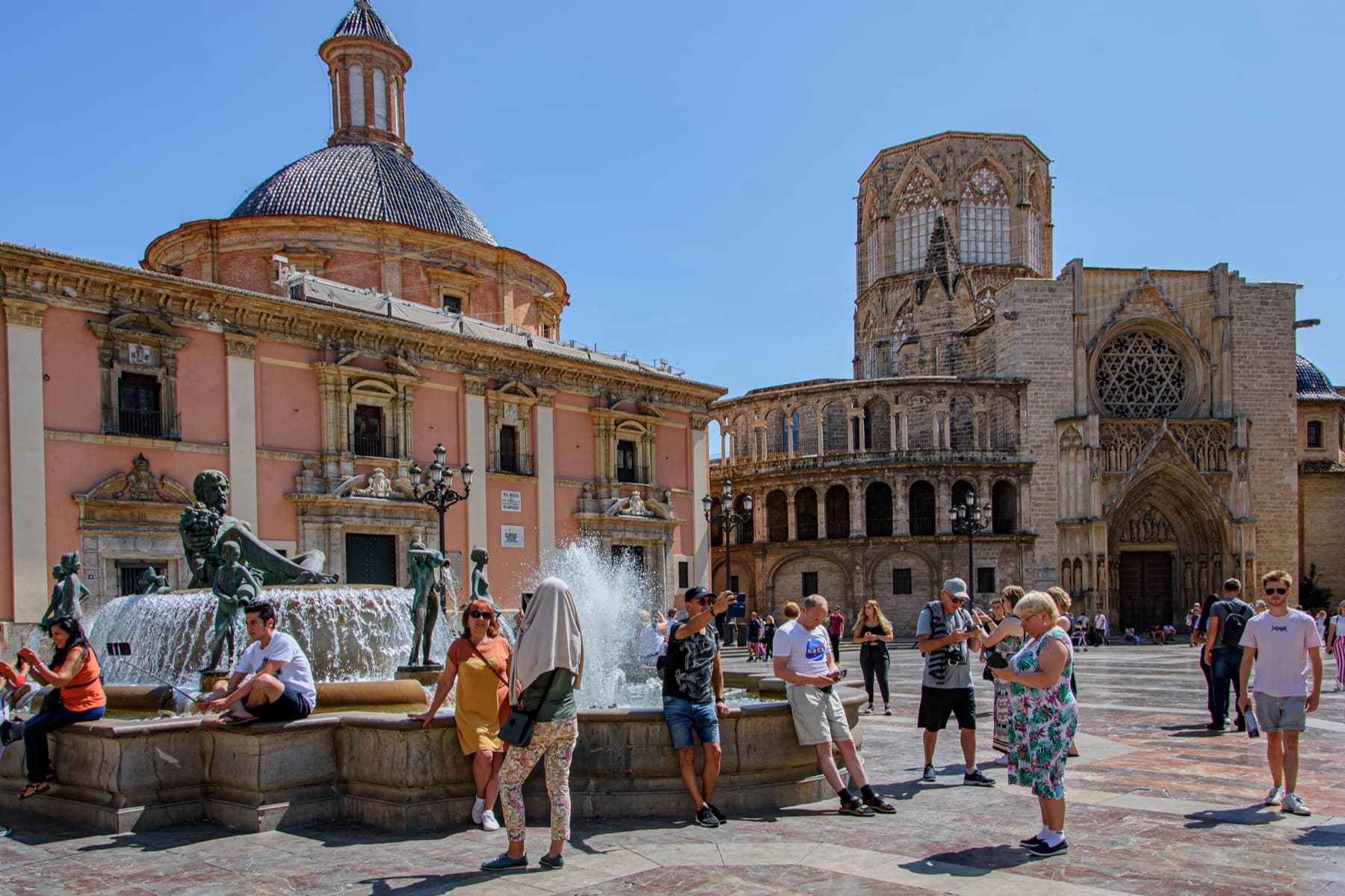
A real city, not a resort: the old town, a nine-kilometre park in the old riverbed and the beach at the end of the tram line. Rents have risen, but it is still good value for a city its size, and the roles we place there come with breakfast and lunch at work and free Spanish lessons.
Málaga and Alicante
Málaga is where most Nordic, Dutch and German speakers on the Costa del Sol work, so it is the easiest place to make friends from week one, with Granada and Seville a short trip away. Alicante, on the Costa Blanca, is smaller and cheaper, with the beach and the Explanada a walk from the centre. People either love its calm or move on after a year.
Madrid
No beach, but the biggest job market in Spain, museums, late nights and trains to everywhere. Rent is the highest of the four, so it suits people who want their first job abroad to lead to the next one.
Daily life in Spain
- The day runs late: lunch at two, dinner at nine, terraces full past midnight.
- Healthcare is public and good once you're registered; many employers add private cover.
- English works in the city centres; Spanish makes everything else easier. Most people take lessons in their first months.
- Weekends are cheap and close: mountains, white villages, other cities by train or bus.
Questions people ask
Which Spanish city is best if I don't speak Spanish?
Málaga and Valencia: both have large international communities, and in both you work in your own language.
Can I live on a customer service salary in Spain?
Yes, sharing a flat. A comfortable month in Málaga or Valencia costs about €950 to €1,250 all in, and customer service roles in these cities pay from about €1,600 gross a month.
Read next
- Moving to Spain for work, step by step
- Working in Spain: contracts, pay and payslips
- Working and living in Spain
Free for candidates, always. The employer pays us when you are hired.